If you’ve ever worked on STM32, Arduino, or any hardware project, you already know this pain:
You power your circuit…
Voltage fluctuates…
Something heats up…
And suddenly—you’re debugging a problem that shouldn’t even exist.
I’ve been there more times than I want to admit.
That’s exactly why a good lab power supply is not a luxury—it’s a necessity.
Recently, I came across the KUAiQU 30V 10A Programmable DC Power Supply, and honestly… for this price, it’s surprisingly powerful.
Table of Contents
🔍 First Impressions – Not Just Another Cheap Supply
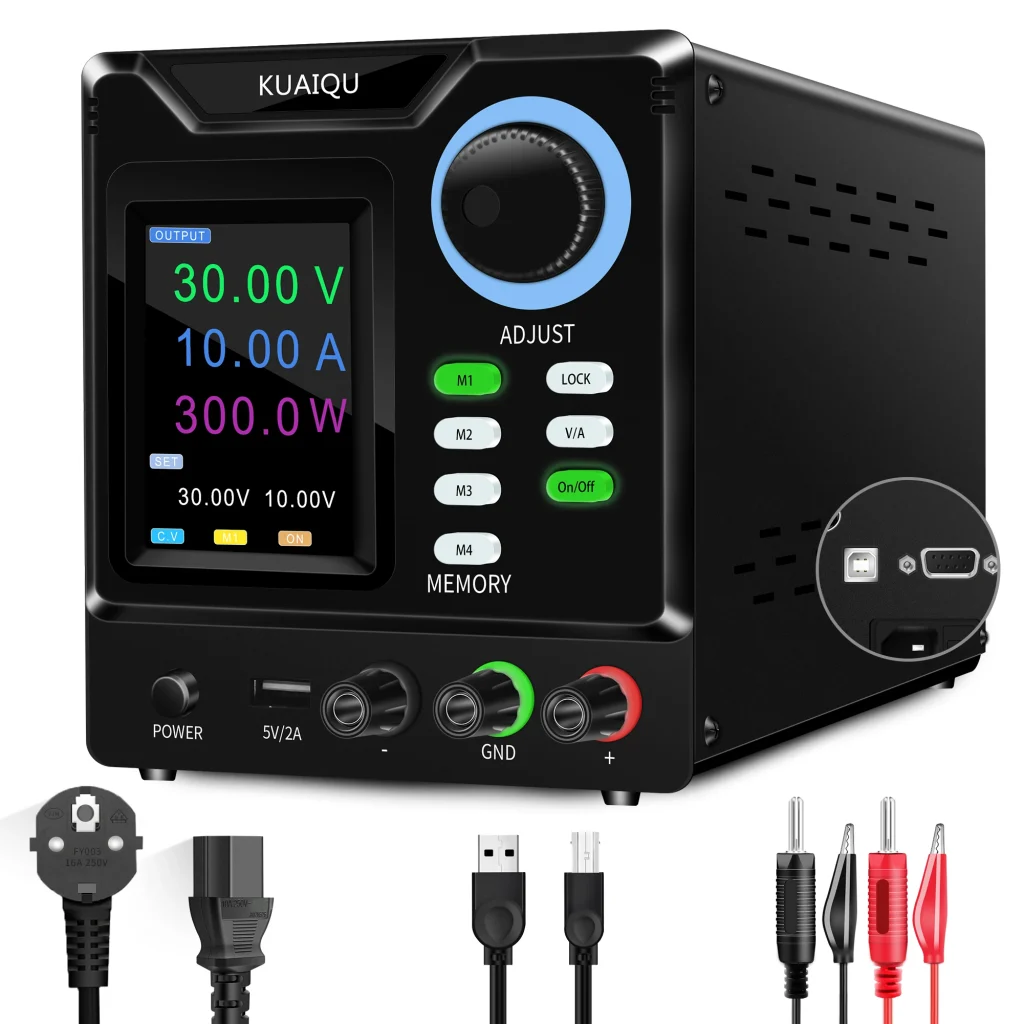
At first glance, it looks like a typical budget unit.
But once you start using it, you notice things that actually matter:
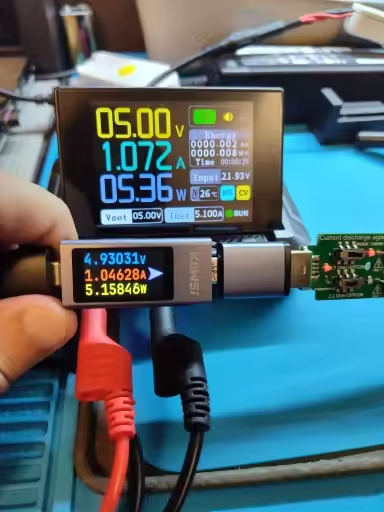
- Stable output (no random drops)
- Clear digital display
- Smooth control over voltage and current
And most importantly, it doesn’t behave like those “cheap noisy supplies” that ruin your debugging.
⚙️ What You Actually Get (Real Value Breakdown)
🔌 Wide Output Range (0–30V, 0–10A)
This is where it becomes useful for real work.
You can:
- Power STM32 / ESP32 boards safely
- Test DC motors or relays
- Run high-current loads (up to 10A)
👉 For embedded engineers, this covers 90% of daily lab needs
🧠 Programmable Control (RS232)
Now this is something most cheap supplies don’t offer.
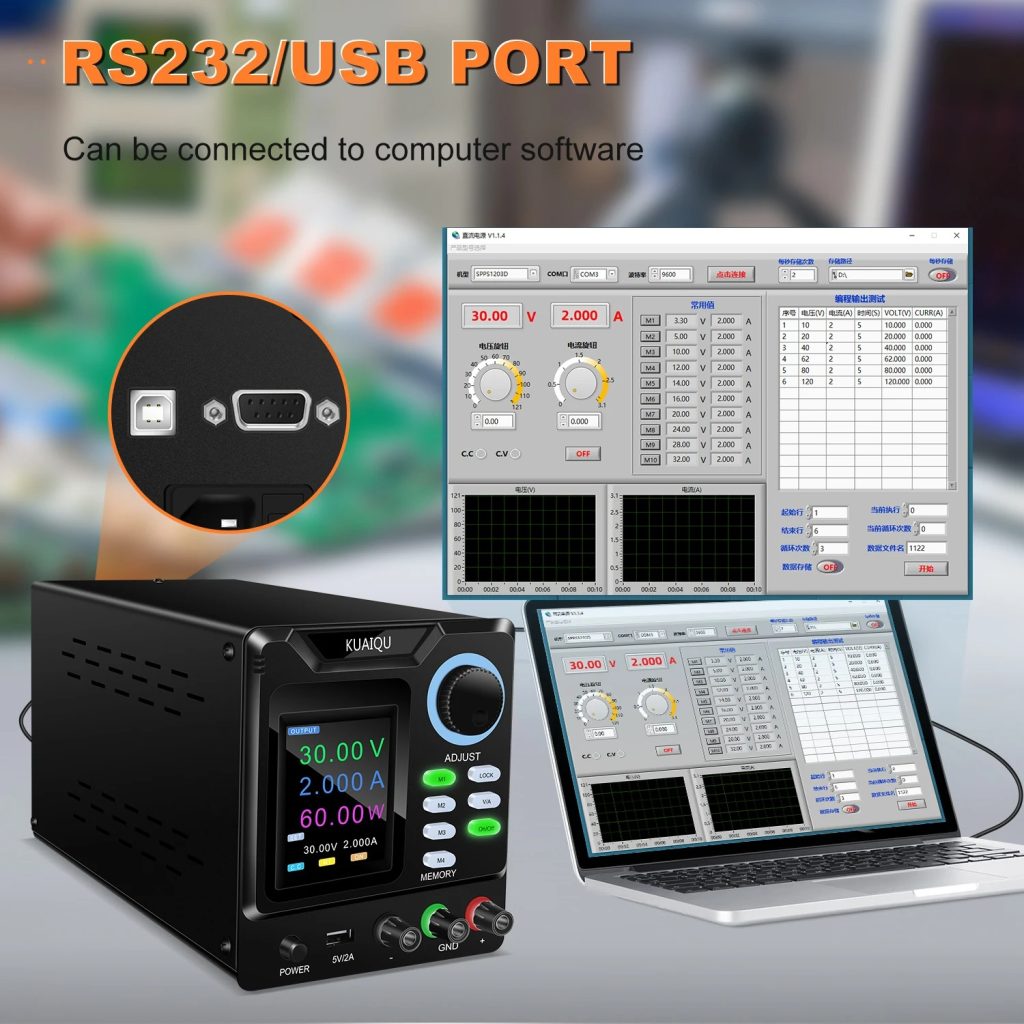
You can:
- Control it from a PC
- Automate testing
- Log voltage/current behavior
If you’re doing:
- Product development
- Repeated testing
- Industrial prototypes
👉 This feature alone makes it worth considering.
🔋 Battery Charging Mode (Very Practical)
If you’re working with:
- Lithium batteries
- BMS systems
- Solar projects
This becomes extremely useful.
You can simulate charging conditions and test behavior properly—without building extra circuits.
📊 Clean, Real-Time Display
You see:
- Voltage
- Current
- Power
Clearly and instantly.
No guessing. No multimeter needed every time.
💾 Memory Function (Underrated Feature)
This is something I personally like.
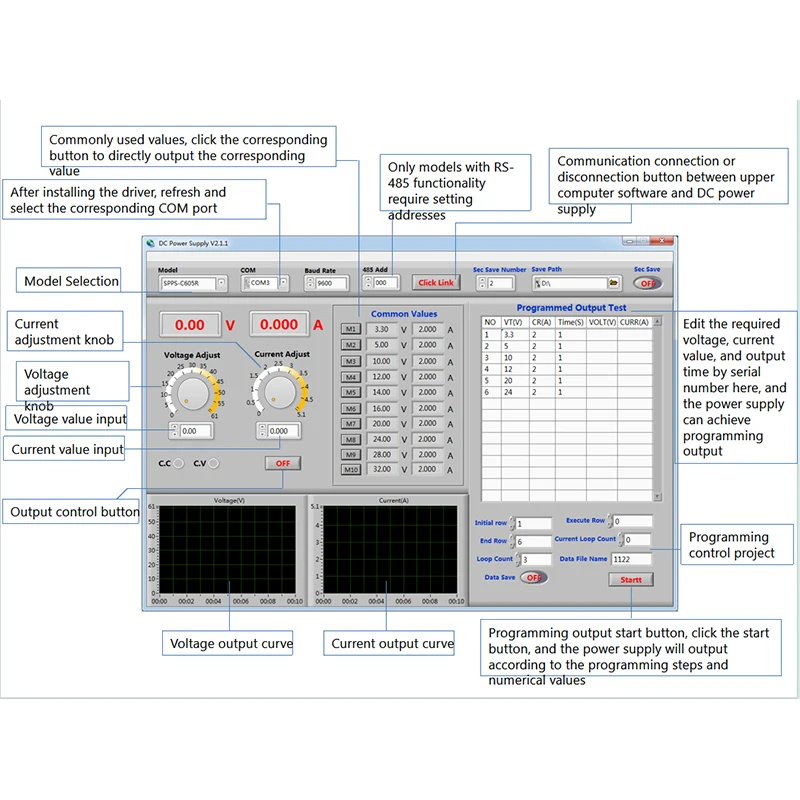
You can save settings and reuse them.
👉 If you repeatedly test:
- Same circuit
- Same voltage levels
- Same current limits
This saves real time.
🛠️ Where This Power Supply Fits Perfectly
Let’s be practical.
This is NOT for high-end lab environments.
But it’s PERFECT for:
- 🔧 Embedded development (STM32, Arduino, ESP32)
- 🌐 IoT prototyping
- 🔋 Battery & BMS testing
- ⚡ DC-DC converter experiments
- 🧪 Personal electronics lab
👉 Basically, your home lab or small R&D setup
💰 Is It Worth the Price?
At around $67, here’s the reality:
You’re getting:
✔ 30V / 10A output
✔ Programmable interface
✔ Stable performance
✔ Useful real-world features
If you compare this with brands like Rigol or Keysight…
👉 You’d easily spend $200–$500+
⚠️ Honest Downsides (No Marketing Talk)
Let’s be real:
- Build quality is decent, not premium
- RS232 instead of modern USB
- Not for heavy industrial 24/7 use
But again—at this price, that’s expected.
🏆 Final Thoughts
If you are:
- Building projects regularly
- Debugging circuits
- Working with power electronics
Not flashy.
Not expensive.
But very practical.
Read more:
- High Speed J-Link V8 USB JTAG Debugger for STM32 – Is It Worth Buying?
- ANENG 683 Smart Multimeter Review – Touchscreen Auto-Ranging Multimeter Under $20
Liked this article? Subscribe to our newsletter:
or,
Visit LabProjectsBD.com for more inspiring projects and tutorials.
Thank you!



0 Comments