AquaCon is an automatic water pump controller we designed for homes and apartment buildings in Bangladesh, where water is stored in an underground reserve tank and pumped to an overhead tank. More than 100 units have been sold.
- The problem it solves
- How AquaCon works
- Hardware
- Why voltage probes
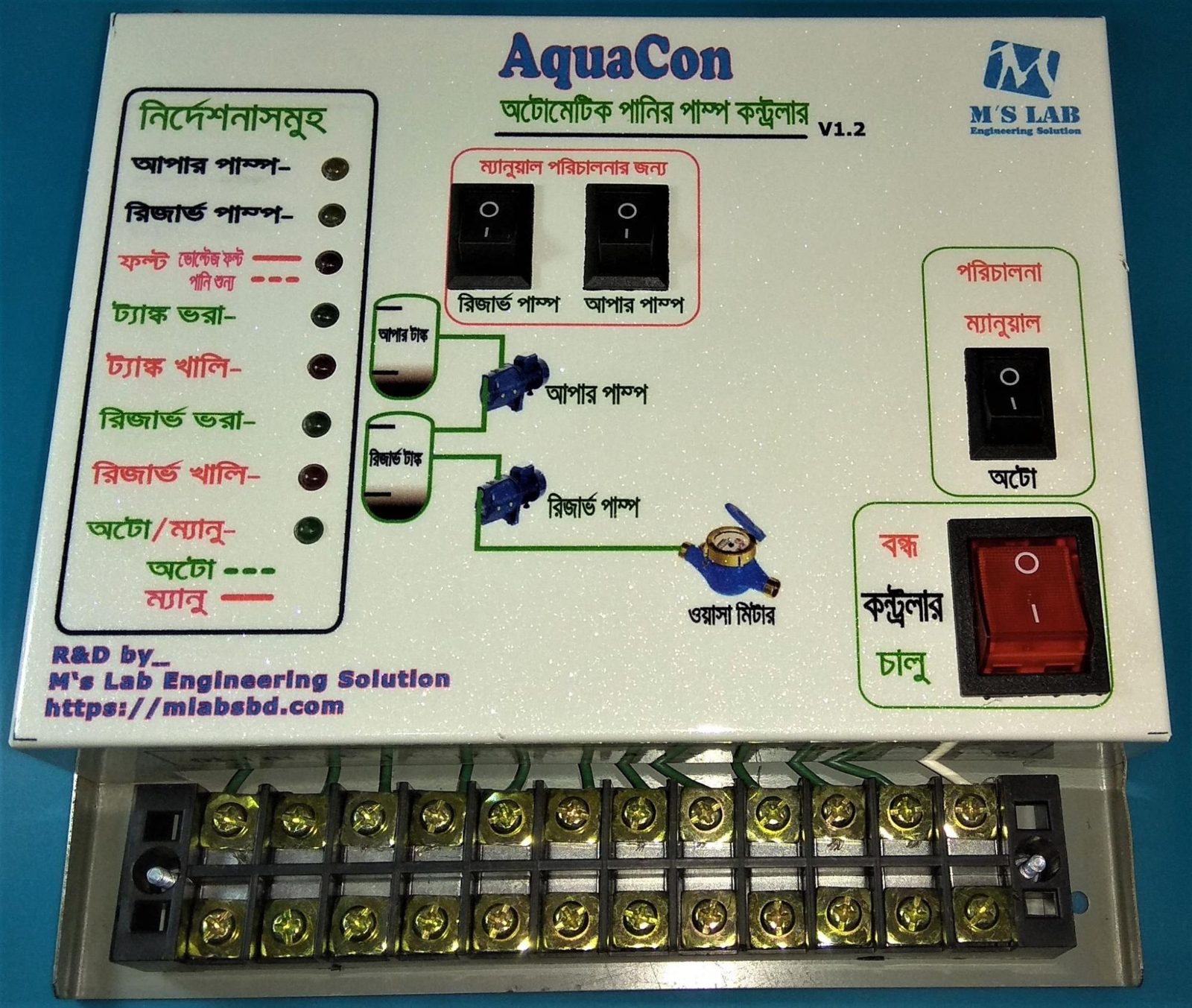
Table of Contents
The problem it solves
Without automation, someone has to switch the pump on when the overhead tank is empty and off before it overflows, and the pump can run dry if the reserve tank is empty. Overflowing tanks waste water, and dry running damages pumps.
How AquaCon works
- Probes in the overhead and reserve tanks sense the water level
- The pump starts automatically when the overhead tank is low
- The pump stops when the overhead tank is full
- The pump is not allowed to start when the reserve tank is empty, protecting it from dry running
- Front-panel lamps, labelled in Bangla, show tank and pump status
- A manual mode lets the user run the pump directly when needed
Hardware
| Block | Details |
|---|---|
| Microcontroller | PIC |
| Level sensing | Voltage-probe sensing in the tanks |
| Output | Pump contactor/relay drive |
| Front panel | Bangla-labelled indicators and switches |
| Installation | Wall-mounted enclosure with terminal block |
Why voltage probes?
Probe sensing has no moving parts, unlike float switches, which jam or wear out. The controller applies a small sensing voltage to the probes and detects whether water connects them, so a set of simple stainless or brass probes at different heights gives reliable level points.
Read more about our other products on the Projects page.
Planning a vending, metering or remote-monitoring product? We design the controller, firmware and IoT link, and support field deployment. Message us on WhatsApp or use the contact form.



0 Comments