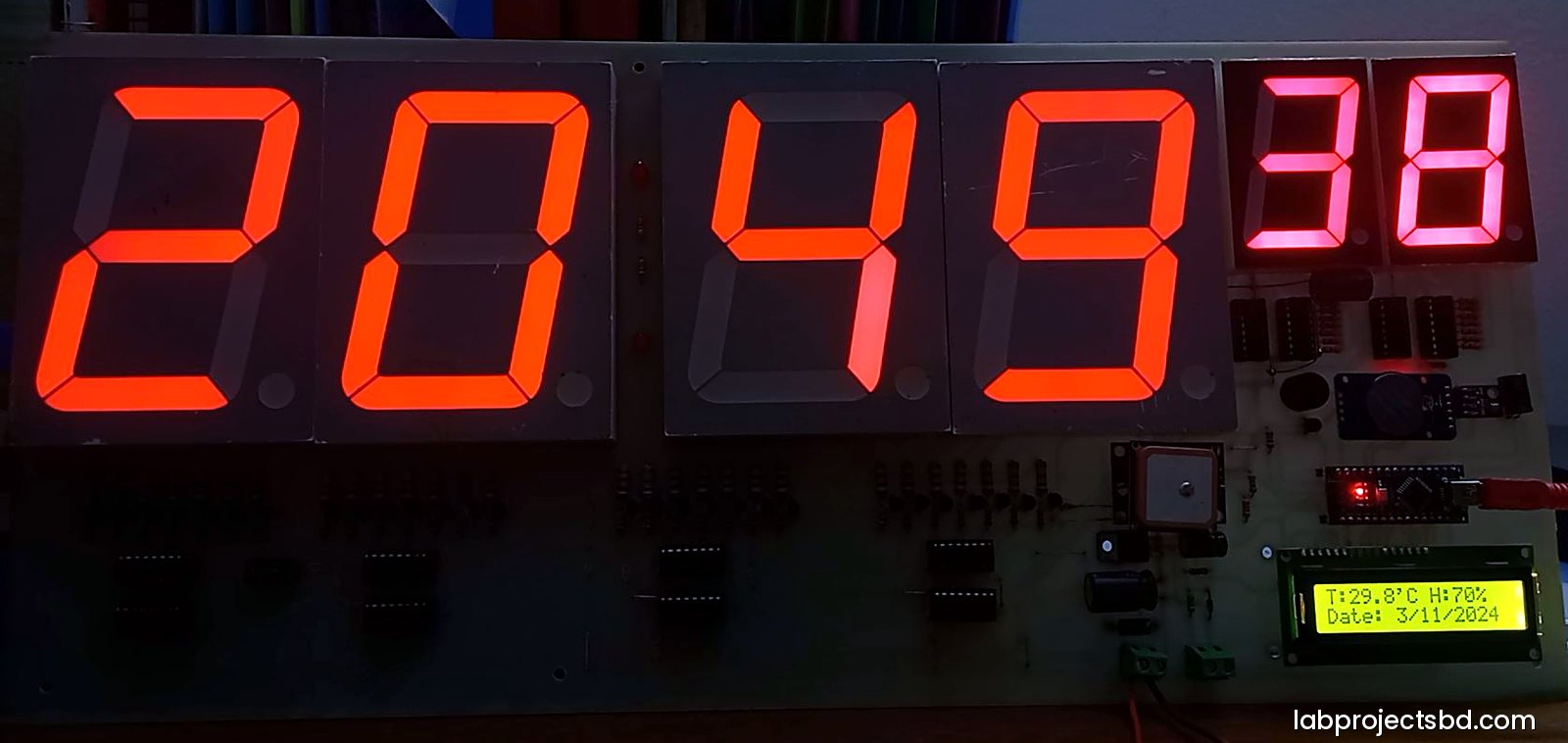
At a power substation, the time on the wall clock matters: it is the reference staff use when they record events. This big LED clock sets itself from GPS, so it never needs manual adjustment, and it can also record the time of two fault signals. More than 20 units are in service at power substations, a mosque and other sites.
| Year | 2024 |
|---|---|
| Installed at | Power substations, a mosque and other sites |
| Units | 20+ |
| Controller | Arduino Nano |
| Time source | NEO-8 series GPS, automatic sync |
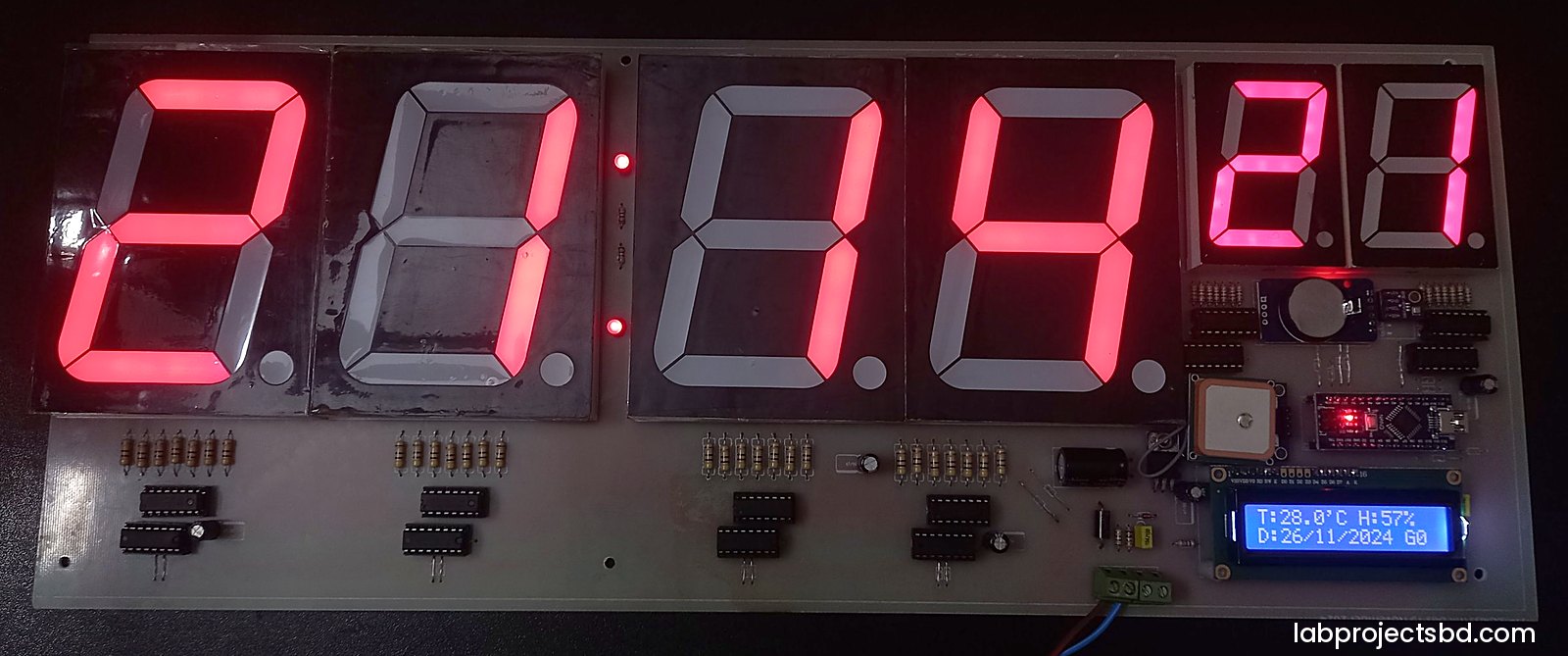
| Display | 4-inch digits (hours and minutes), 2-inch digits (seconds), 16×2 LCD |
Why GPS?
Ordinary wall clocks drift by seconds every week and need resetting after every power cut. A GPS receiver gets precise time from the satellites, so the clock synchronises automatically and every unit on every site shows the same, correct time.
Features
- Large, readable digits: 4-inch seven-segment digits for hours and minutes, 2-inch digits for seconds, readable across a control room or prayer hall.
- Automatic time sync from a NEO-8 series GPS module, with an on-board RTC module as well.
- Info display: a 16×2 LCD shows the date, temperature and humidity.
- Two fault trigger inputs (Fault 1 and Fault 2): the site can wire them to any signal it wants to timestamp, such as a breaker trip, an alarm contact or a generator start.
- Fault history: the clock keeps the time of the last trigger on each input, so staff can see exactly when an event happened.
Design notes
Large LED segments are made of several LEDs in series, so they need a higher supply and a proper driver stage. A small microcontroller can’t drive them directly. Each digit has its own driver ICs and resistor bank, controlled by the Arduino Nano. Keeping the GPS, RTC, sensor and display on one board made the clock easy to build in batches for multiple sites.
🛠️ Need a custom display, clock or event recorder for your site?
We take projects from idea to production: circuit and PCB design, firmware, prototypes, enclosure integration and small-batch manufacturing. NDA available on request, and you own the design files.
💬 Discuss your project on WhatsApp or send the details through our contact form →



0 Comments